
Hyundai Accent (HC): Maintenance / Explanation of scheduled maintenance items
Engine Oil and Filter
The engine oil and filter should be changed at the intervals specified in the maintenance schedule. If the Hyundai Accent is being driven in severe conditions, more frequent oil and filter changes are required to protect the engine from accelerated wear and sludge buildup.
Drive Belts
Inspect all drive belts for evidence of cuts, cracks, excessive wear or oil saturation and replace if necessary. Drive belts should be checked periodically for proper tension and adjusted as necessary. A worn or loose belt can cause noise, charging issues, or reduced accessory performance on your Hyundai Accent.
Fuel Filter
A clogged-up fuel filter may limit the vehicle driving speed, damage the emission system, and cause hard starting. When a considerable amount of foreign substances are accumulated in the fuel tank, the fuel filter should be replaced.
Upon installing a new fuel filter, operate the engine for several minutes, and check the connections for any leakages. Fuel filters should be installed by an authorized HYUNDAI dealer to ensure correct sealing and safe fuel-system operation.
Fuel Lines, Fuel Hoses and Connections
Check the fuel lines, fuel hoses and connections for leakage and damage. Have an authorized HYUNDAI dealer replace any damaged or leaking parts immediately. On the Hyundai Accent, even a small fuel leak can create a serious fire risk.
Vapor Hose and Fuel Filler Cap
The vapor hose and fuel filler cap should be inspected at those intervals specified in the maintenance schedule. Make sure a new vapor hose or fuel filler cap is correctly replaced. A damaged cap or hose can contribute to evaporative emissions issues and may trigger a warning light.
Vacuum Crankcase Ventilation Hoses (if equipped)
Inspect the surface of hoses for evidence of heat and/or mechanical damage. Hard and brittle rubber, cracking, tears, cuts, abrasions, and excessive swelling indicate deterioration. Particular attention should be paid to examine those hose surfaces nearest to high heat sources, such as the exhaust manifold.
Inspect the hose routing to ensure that the hoses do not come in contact with any heat source, sharp edges or moving component which might cause heat damage or mechanical wear. Inspect all hose connections, such as clamps and couplings, to make sure they are secure, and that no leaks are present. Hoses should be replaced immediately if there is any evidence of deterioration or damage.
Air Cleaner Filter
A genuine HYUNDAI air cleaner filter is recommended when the filter is replaced. Using the correct Hyundai Accent air filter helps maintain proper airflow, fuel economy, and engine protection in dusty or high-traffic conditions.
Spark Plugs
Make sure to install new spark plugs of the correct heat range. Using the proper specification helps ensure smooth starting, stable idle, and efficient combustion in your Hyundai Accent.
When assembling parts, be sure to wipe out foreign substances inside and outside of the boot bottom of the ignition coil and the insulator of the spark plug with a soft cloth to prevent contamination of the spark plug insulator.
Cooling System
Check cooling system components, such as radiator, coolant reservoir, hoses and connections for leakage and damage. Replace any damaged parts. A healthy cooling system helps prevent overheating and protects the Hyundai Accent engine under load.
Engine Coolant
The coolant should be changed at the intervals specified in the maintenance schedule. Replacing coolant on time helps maintain corrosion protection and stable engine temperature control.
Intelligent Variable Transmission (IVT) Fluid
Intelligent Variable Transmission (IVT) Fluid should not be checked under normal usage conditions. But, the Intelligent Variable Transmission (IVT) Fluid should be changed under severe usage conditions. Have the Intelligent Variable Transmission (IVT) Fluid changed by an authorized HYUNDAI dealer according to the maintenance schedule.
(Refer to "Maintenance Under Severe Usage Conditions" in this chapter.)
NOTICE
Intelligent variable transmission (IVT) fluid color is basically light amber.
As the vehicle is driven, the intelligent variable transmission (IVT) fluid will begin to look darker. This is a normal condition and you should not judge the need to replace the fluid based upon the changed color.
CAUTION
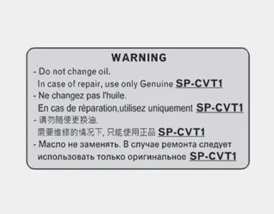
The use of non-specified fluid (even marked as compatible with genuine) could result in shift quality deterioration and vibrations, and eventual transmission failure.
Use only specified Intelligent Variable Transmission (IVT) fluid. (Refer to "Recommended lubricants and capacities" in chapter 8.)
Manual Transmission Fluid (if equipped)
Inspect the manual transmission fluid according to the maintenance schedule. Proper fluid level and condition help protect synchronizers and gears in Hyundai Accent manual transmission models.
Brake Hoses and Lines
Visually check for proper installation, chafing, cracks, deterioration and any leakage. Replace any deteriorated or damaged parts immediately.
Brake/Clutch Fluid
Check the brake/clutch fluid level in the brake/clutch fluid reservoir. The level should be between the MIN and the MAX marks on the side of the reservoir. Use only hydraulic brake/clutch fluid conforming to DOT4 specification.
Parking Brake
Inspect the parking brake system including the parking brake cables. Proper adjustment ensures the Hyundai Accent remains securely parked on inclines.
Brake Discs, Pads, Calipers
Check the pads for excessive wear, discs for run out and wear, and calipers for fluid leakage. Any reduction in braking performance should be addressed immediately for Hyundai Accent safety.
Exhaust Pipe and Muffler
Visually inspect the exhaust pipes, muffler and hangers for cracks, deterioration, or damage. Start the engine and listen carefully for any exhaust gas leakage. Tighten connections or replace parts as necessary.
Suspension Mounting Bolts
Check the suspension connections for looseness or damage. Retighten to the specified torque. Loose fasteners can affect ride quality and alignment on your Hyundai Accent.
Steering Gear Box, Linkage & Boots/Lower Arm Ball Joint
With the vehicle stopped and the engine off, check for excessive freeplay in the steering wheel. Check the linkage for bends or damage. Check the dust boots and ball joints for deterioration, cracks, or damage. Replace any damaged parts.
Drive Shafts and Boots
Check the drive shafts, boots and clamps for cracks, deterioration, or damage. Replace any damaged parts and, if necessary, repack the grease.
Air Conditioning Refrigerant
Check the air conditioning lines and connections for leakage and damage. If cooling performance drops, have the Hyundai Accent A/C system inspected by qualified service personnel.


Other information:
Hyundai Accent (HC) (2017 - 2022) Owner's Manual: Changing Tires
WARNING A vehicle can slip or roll off of a jack causing serious injury or death to you or those nearby. Take the following safety precautions: Never place any portion of your body under a vehicle that is supported by a jack. Your Hyundai Accent must be supported only at the correct jacking points and must never be relied on as a “stand.� NEVER attempt to change a tire in the lane of traffic.Hyundai Accent (HC) (2017 - 2022) Owner's Manual: LCD Display Modes
The information provided may differ depending on which functions and options are available for your specific Hyundai Accent configuration. Engage parking brake to edit settings/Shift to P to edit settings This warning message appears if you attempt to adjust User Settings while driving. - Manual transmission For your safety, change User Settings only after parking the vehicle, applying the parking brake, and moving the shift lever to neutral.
Categories
- Manuals Home
- Hyundai Accent Owners Manual
- Hyundai Accent Service Manual
- Questions & Answers
- Video Guides
- Useful Resources
- New on site
- Most important about car
- Privacy Policy

0.0091