
Hyundai Accent (HC): Maintenance / Fuses
Contents:
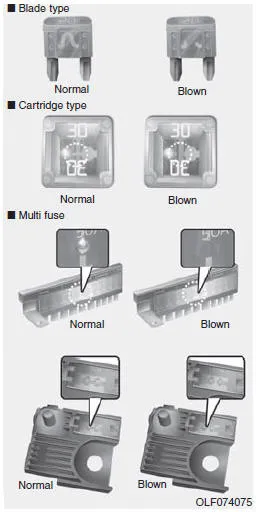
Your Hyundai Accent electrical system is protected from electrical overload by fuses. A fuse is designed to open the circuit if current becomes excessive, helping to prevent wiring damage and protecting electrical components.
This vehicle has 2 (or 3) fuse panels depending on equipment: one located in the driver’s side panel bolster and another in the engine compartment near the battery. Always refer to the fuse/relay label for the correct circuit names and ratings for your specific Hyundai Accent configuration.
If any of your vehicle’s lights, accessories, or controls do not work, check the appropriate circuit fuse. If a fuse has blown, the element inside the fuse will be melted or broken.
If the electrical system does not work, first check the driver’s side fuse panel. Before replacing a blown fuse, turn the engine and all switches OFF, then disconnect the negative battery cable. Always replace a blown fuse with one of the same rating.
If the replacement fuse blows again, this indicates an electrical problem. Avoid using the system involved and immediately consult an authorized HYUNDAI dealer to have your Hyundai Accent inspected.
WARNING
NEVER replace a fuse with anything but another fuse of the same rating.
- A higher capacity fuse could cause damage and possibly cause a fire.
- Do not install a wire or aluminum foil instead of the proper fuse - even as a temporary repair. It may cause extensive wiring damage and possibly a fire.
NOTICE
Do not use a screwdriver or any other metal object to remove fuses because it may cause a short circuit and damage the system. Use the provided fuse puller/removal tool whenever possible.
Instrument Panel Fuse Replacement
Power connector
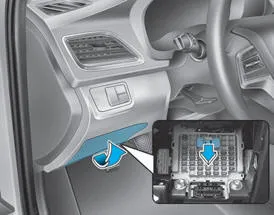
If your Hyundai Accent will be parked for more than a month, follow the steps below in advance to help reduce battery discharge during extended storage.
1. Turn off the engine.
2. Turn off the headlamps and tail lamps.
3. Open the inner fuse panel cover and pull out the power connector.
Inner panel fuse replacement
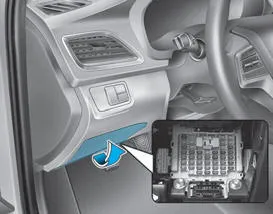
1. Turn the engine off.
2. Turn all other switches OFF.
3. Open the fuse panel cover.
4. Refer to the label on the inside of the fuse panel cover to locate the suspected fuse location.
5. Pull the suspected fuse straight out. Use the removal tool provided in the engine compartment fuse panel.
6. Check the removed fuse; replace it if it is blown. Spare fuses are provided in the instrument panel fuse panels (or in the engine compartment fuse panel).
7. Push in a new fuse of the same rating, and make sure it fits tightly in the clips. If it fits loosely, consult an authorized HYUNDAI dealer.
Information
If you do not have a spare, use a fuse of the same rating from a circuit you may not need for operating the vehicle, such as the cigar lighter fuse.
If the headlights or other electrical components do not work and the fuses are OK, check the fuse block in the engine compartment. If a fuse is blown, it must be replaced with the same rating.
In an emergency, if you do not have a spare fuse, use a fuse of the same rating from a circuit you may not need for operating the vehicle.
If the headlamps or other electrical components do not work and the fuses are undamaged, check the fuse panel in the engine compartment. If a fuse is blown, it must be replaced with the same rating.
Engine Compartment Panel Fuse Replacement
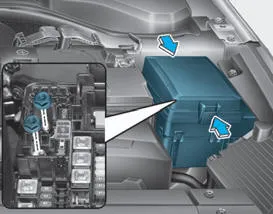
â– Blade type fuse
1. Turn the engine off.
2. Turn all other switches OFF.
3. Remove the fuse panel cover by pressing the tab and pulling up.
4. Check the removed fuse; replace it if it is blown. To remove or insert the fuse, use the fuse puller in the engine compartment fuse panel.
5. Push in a new fuse of the same rating, and make sure it fits tightly in the clips. If it fits loosely, consult an authorized HYUNDAI dealer.
CAUTION
After checking the fuse box in the engine compartment securely close the fuse box cover inside the engine compartment, until it clicks.
If the fuse box is not closed properly, water may leak inside, possibly causing a malfunction with the electrical system.
Main fuse
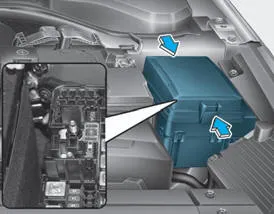
If the main fuse is blown, it must be removed as follows:
1. Turn off the engine.
2. Disconnect the negative battery cable.
3. Remove the fuse panel cover by pressing the tab and pulling it up.
4. Remove the nuts shown in the picture above.
5. Replace the fuse with a new one of the same rating.
6. Reinstall in the reverse order of removal.
Information
If the main fuse is blown, consult an authorized HYUNDAI dealer.
Multi fuse
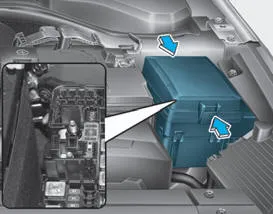
If the multi fuse is blown, it must be removed as follows:
1. Turn off the engine.
2. Disconnect the negative battery cable.
3. Remove the fuse panel cover by pressing the tab and pulling it up.
4. Remove the nuts shown in the picture above.
5. Replace the fuse with a new one of the same rating.
6. Reinstall in the reverse order of removal.
Information
If the multi fuse is blown, consult an authorized HYUNDAI dealer.
Fuse/Relay Panel Description
Instrument panel fuse panel
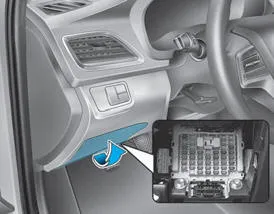
Inside the fuse/relay box cover, you can find the fuse/relay label describing fuse/relay names and ratings. Use this label to confirm the correct circuit before replacing any fuse in your Hyundai Accent.
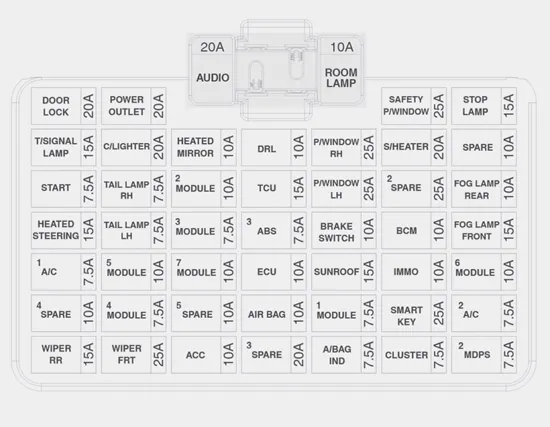
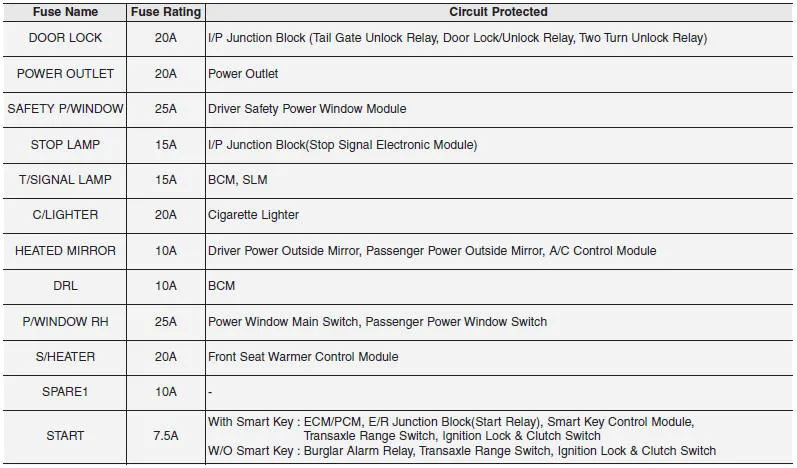
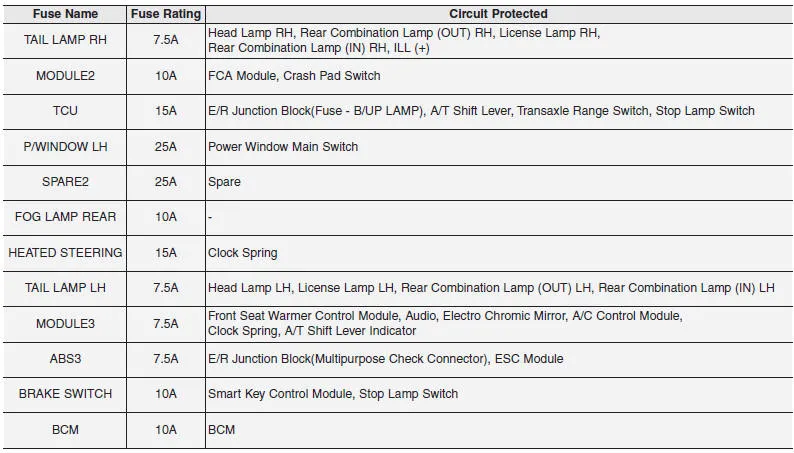
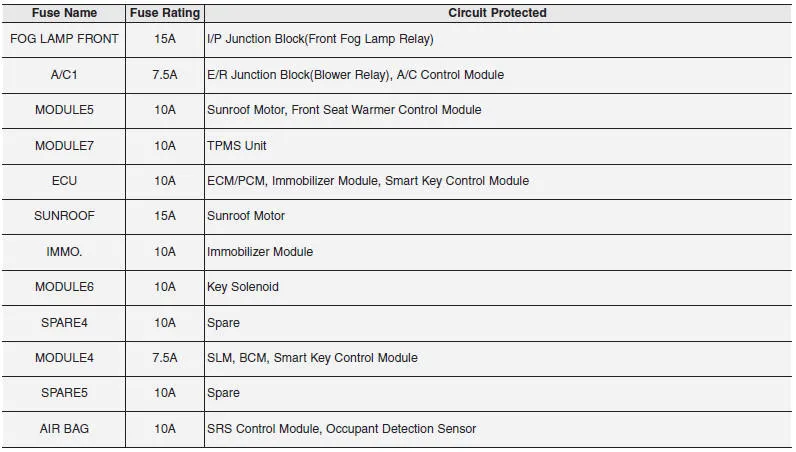
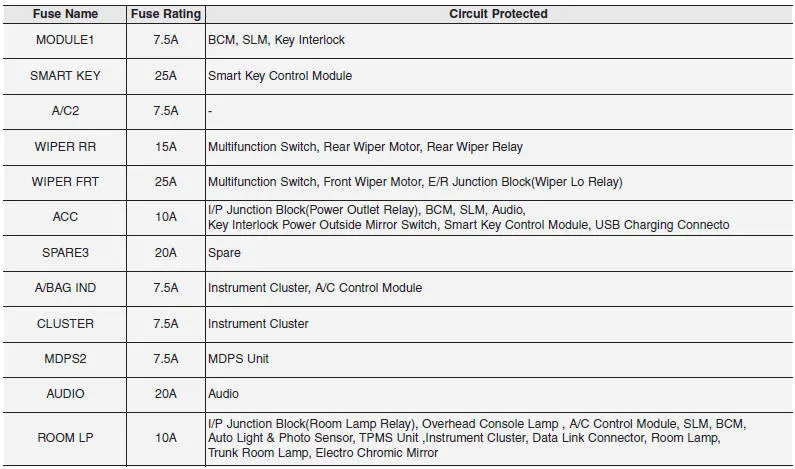
Engine compartment fuse panel
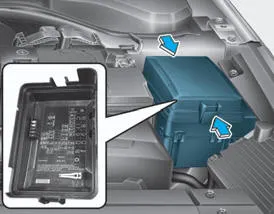
On your Hyundai Accent, the engine-compartment fuse panel houses high-current fuses and relays that protect major electrical circuits. Inside the fuse/relay box cover, you will find a fuse/relay label that lists the fuse and relay names along with their amperage ratings, making it easier to identify the correct circuit before replacing a fuse.
As a practical Hyundai Accent maintenance tip, always switch the ignition to LOCK/OFF before checking fuses, and replace a blown fuse only with one of the same rating to help prevent wiring damage.
Information
Not every fuse panel description printed in this manual will match every Hyundai Accent exactly. The details were accurate at the time of printing, and equipment can vary by model year, trim level, or market. Whenever you inspect the fuse panel in your vehicle, rely on the fuse panel label inside the cover as the most direct and up-to-date reference.
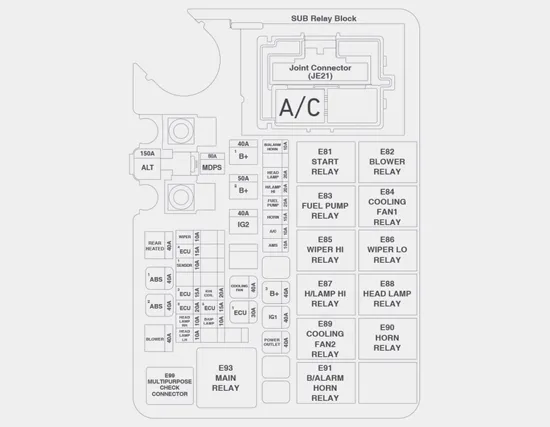
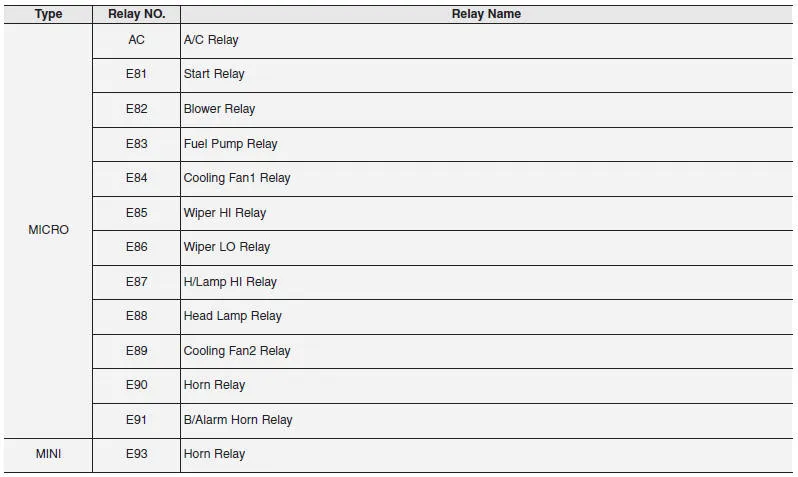
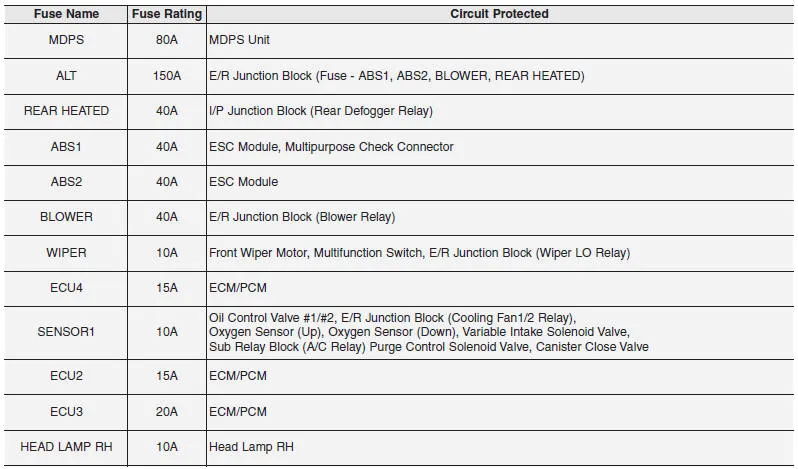
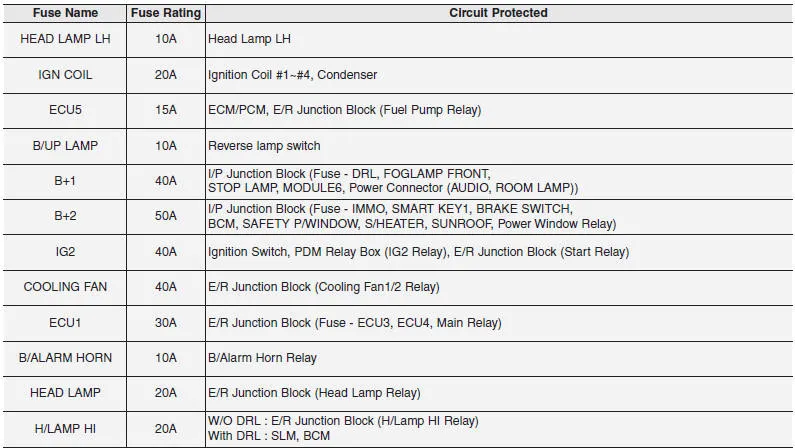
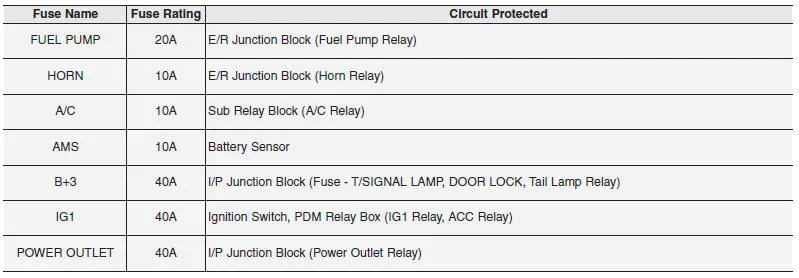
Engine compartment fuse panel (Battery terminal cover)
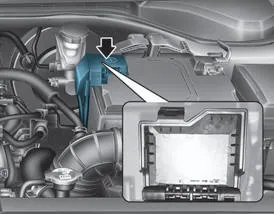
On the Hyundai Accent, the engine compartment fuse panel (located under the battery terminal cover) helps protect major electrical circuits from overload. Inside the fuse/relay box cover, you can find a fuse/relay label describing fuse/relay names and ratings, which makes it easier to identify the correct circuit during inspection or when replacing a fuse.
Information
Not all fuse panel descriptions in this manual may be applicable to your Hyundai Accent; the information is accurate at the time of printing. Because equipment can vary by model year, trim level, and market, always refer to the fuse panel label inside your vehicle’s fuse/relay box cover when you inspect the fuse panel to confirm the exact fuse and relay names and ratings.
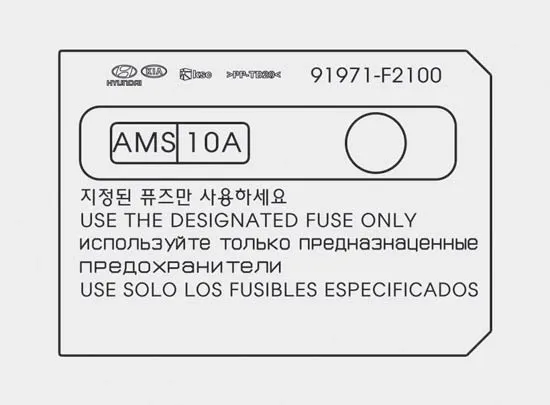
NOTICE
After checking the fuse panel in the engine compartment, securely install the cover. If it is not securely latched, electrical failure may occur from water contact. Ensure the cover is seated evenly and fully clipped into place before closing the hood.


Other information:
Hyundai Accent (HC) (2017 - 2022) Owner's Manual: LCD Display Modes
The information provided may differ depending on which functions and options are available for your specific Hyundai Accent configuration. Engage parking brake to edit settings/Shift to P to edit settings This warning message appears if you attempt to adjust User Settings while driving. - Manual transmission For your safety, change User Settings only after parking the vehicle, applying the parking brake, and moving the shift lever to neutral.
Contents
Categories
- Manuals Home
- Hyundai Accent Owners Manual
- Hyundai Accent Service Manual
- Questions & Answers
- Video Guides
- Useful Resources
- New on site
- Most important about car
- Privacy Policy

0.0087