
Hyundai Accent (HC): Child restraint system (CRS) / Installing a Child Restraint System (CRS)
WARNING
Before installing your child restraint system always:
- Read and follow the instructions provided by the manufacturer of the child restraint.
- Read and follow the instructions regarding child restraint systems in this manual.
Failure to follow all warnings and instructions could increase the risk of the SERIOUS INJURY or DEATH if an accident occurs.
WARNING
If the vehicle headrest prevents proper installation of a child seat (as described in the child seat system manual), the headrest of the respective seating position shall be readjusted or entirely removed.
After selecting a proper child seat for your child, check to make sure it fits properly in your vehicle. Follow the instructions provided by the manufacturer when installing the child seat. The Hyundai Accent rear seating area is designed to securely accommodate approved child restraint systems when installed correctly.
Note these general steps when installing the seat to your vehicle:
- Properly secure the child restraint to the vehicle. All child restraints must be secured to the vehicle with the lap part of a lap/shoulder belt or with the LATCH system. If using the lap/shoulder belt for your child restraint, the convertible locking retractor should be pulled all the way out to engage the "automatic locking" mode.
- Make sure the child restraint is firmly secured. After installing a child restraint to the vehicle, push and pull the seat forward-and-back and side-to-side to verify that it is securely attached to the seat. A child restraint secured with a seat belt should be installed as firmly as possible, although some side-to-side movement can be expected.
- Secure the child in the child restraint. Make sure the child is properly strapped in the child restraint according to the manufacturer instructions.
CAUTION
A child restraint in a closed vehicle can become very hot. To prevent burns, check the seating surface and buckles before placing your child in the child restraint.
Lower Anchors and Tether for Children (LATCH System)
The LATCH system holds a child restraint during driving and in an accident. This system is designed to make installation of the child restraint easier and reduce the possibility of improperly installing your child restraint. The LATCH system uses anchors in the vehicle and attachments on the child restraint, eliminating the need to use seat belts to secure the child restraint to the rear seats of the Hyundai Accent.
Lower anchors are metal bars built into the vehicle. There are two lower anchors for each LATCH seating position that will accommodate a child restraint with lower attachments.
To use the LATCH system in your vehicle, you must have a child restraint with LATCH attachments.
The child seat manufacturer will provide you with instructions on how to use the child seat with its attachments for the LATCH lower anchors.
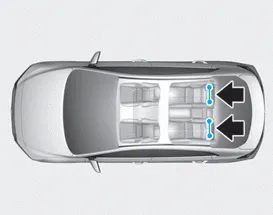
LATCH anchors have been provided in the left and right outboard rear seating positions. Their locations are shown in the illustration. There are no LATCH anchors provided for the center rear seating position.
WARNING
Do not attempt to install a child restraint system using LATCH anchors in the rear center seating position. There are no LATCH anchors provided for this seat. Using the outboard seat anchors can damage the anchors which may break or fail in a collision resulting in serious injury or death.
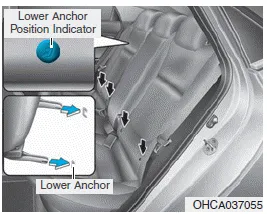
The lower anchor position indicator symbols are located on the left and right rear seat backs to identify the position of the lower anchors in your vehicle (see arrows in illustration).
The LATCH anchors are located between the seatback and the seat cushion of the rear seat left and right outboard seating positions.
Securing a child restraint with the LATCH anchors system
To install a LATCH-compatible child restraint in either of the rear outboard seating positions:
1. Move the seat belt buckle away from the lower anchors.
2. Move any other objects away from the anchors that could prevent a secure connection between the child restraint and the lower anchors.
3. Place the child restraint on the vehicle seat, then attach the seat to the lower anchors according to the instructions provided by the child restraint manufacturer.
4. Follow the child restraint instructions for properly adjusting and tightening the lower attachments on the child restraint to the lower anchors.
WARNING
Take the following precautions when using the LATCH system:
- Read and follow all installation instructions provided with your child restraint system.
- To prevent the child from reaching and taking hold of unretracted seat belts, buckle all unused rear seat belts and retract the seat belt webbing behind the child. Children can be strangled if a shoulder belt becomes wrapped around their neck and the seat belt tightens.
- NEVER attach more than one child restraint to a single anchor. This could cause the anchor or attachment to come loose or break.
- Always have the LATCH system inspected by your authorized HYUNDAI dealer after an accident. An accident can damage the LATCH system and may not properly secure the child restraint.
NOTICE
The recommended weight for the LATCH system is under 65 lb (30 kg).
How to determine an appropriate child restraint weight:
Child weight + Child restraint weight < 65 lb (30kg)
Securing a child restraint seat with "Tether Anchor" system
The top tether anchor system is an important additional safety feature designed to enhance child restraint stability in the Hyundai Accent. When used correctly, the tether anchor helps reduce forward movement of the child restraint during a collision, improving overall protection for your child.
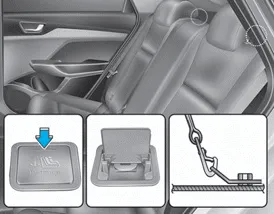
First secure the child restraint with the LATCH lower anchors or the seat belt. If the child restraint manufacturer recommends that the top tether strap be attached, attach and tighten the top tether strap to the top tether strap anchor. Using the tether anchor in the Hyundai Accent provides added restraint support and helps the CRS perform as intended.
Child restraint hook holders are located on the back of the rear seats. These anchors are specifically engineered to withstand crash forces and must only be used for approved child restraint tether straps in the Hyundai Accent.
WARNING
Take the following precautions when installing the tether strap:
- Read and follow all installation instructions provided with your child restraint system.
- NEVER attach more than one child restraint to a single tether anchor. This could cause the anchor or attachment to come loose or break.
- Do not attach the tether strap to anything other than the correct tether anchor. It may not work properly if attached to something else.
- Do not use the tether anchors for adult seat belts or harnesses, or for attaching other items or equipment to the vehicle.
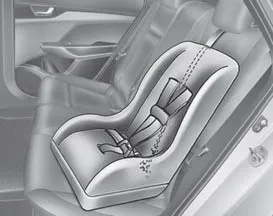
To install the tether anchor:
1. Route the child restraint tether strap over the child restraint seatback. Route the tether strap under the head restraint and between the head restraint posts, or route the tether strap over the top of the vehicle seatback. Make sure the strap is not twisted, as twisting can reduce its effectiveness in the Hyundai Accent.
2. Connect the tether strap hook to the tether anchor, then tighten the tether strap according to the child seat manufacturer’s instructions to firmly secure the child restraint to the seat. A properly tightened tether strap helps limit forward motion during sudden stops or collisions.
3. Check that the child restraint is securely attached to the seat by pushing and pulling the seat forward- and-back and side-to-side. In the Hyundai Accent, a correctly installed child restraint should show minimal movement and remain firmly in place.
Securing a child restraint with lap/shoulder belt
When you are not using the LATCH system, every child restraint system must be secured in a Hyundai Accent rear seating position using the lap portion of a lap/shoulder belt. This method can be very secure when the belt is routed correctly and the retractor is placed in the proper mode, helping your CRS stay tight and stable during normal driving and sudden stops.
WARNING
ALWAYS place a rear-facing child restraint in the rear seat of the vehicle.
Placing a rear-facing child restraint in the front seat can result in serious injury or death if the child restraint is struck by an inflating air bag.
For the best overall protection in your Hyundai Accent, keep children properly restrained in the rear seats and follow both the CRS manufacturer’s instructions and the procedures in this manual.
Automatic locking mode
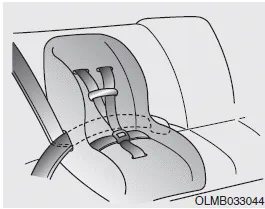
Since all passenger seat belts move freely under normal conditions and only lock under extreme or emergency conditions (emergency locking mode), you must manually pull the seat belt all the way out to shift the retractor to the "Automatic Locking" mode to secure a child restraint. In the Hyundai Accent, this step is essential because it prevents gradual loosening as the vehicle moves and the child shifts in the seat.
The "Automatic Locking" mode will help prevent the normal movement of the child in the vehicle from causing the seat belt to loosen and compromise the child restraint system. To secure a child restraint system, use the following procedure. Take your time and confirm each step before starting your trip in the Hyundai Accent.
To install a child restraint system on the rear seats, do the following:
1. Place the child restraint system on a rear seat and route the lap/ shoulder belt around or through the child restraint, following the restraint manufacturer's instructions. Make sure the CRS sits flat on the Hyundai Accent seat cushion and is centered in the seating position.
Be sure the seat belt webbing is not twisted. Twisted webbing can reduce restraint performance and may prevent the belt from tightening properly.
NOTICE
When using the rear center seat belt, you should also refer to the "Rear Seat Belt – Passenger's 3- point system" section in this chapter.
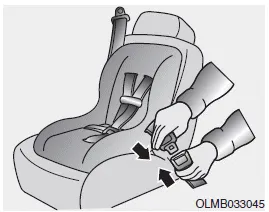
2. Fasten the lap/shoulder belt latch into the buckle. Listen for the distinct "click" sound, and then pull on the latch plate to confirm it is fully locked.
Information
Position the release button so that it is easy to access in case of an emergency.
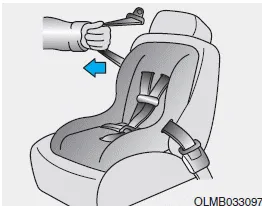
3. Pull the shoulder portion of the seat belt all the way out. When the shoulder portion of the seat belt is fully extended, it will shift the retractor to the "Automatic Locking" (child restraint) mode. In a Hyundai Accent, fully extending the belt is what switches the retractor into the child-seat locking function.
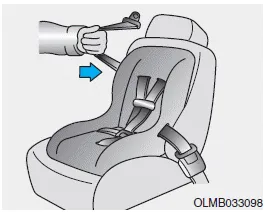
4. Slowly allow the shoulder portion of the seat belt to retract and listen for an audible "clicking" or "ratcheting" sound. This indicates that the retractor is in the "Automatic Locking" mode. If no distinct sound is heard, repeat steps 3 and 4. The controlled, slow retraction helps keep tension on the CRS in the Hyundai Accent.
5. Remove as much slack from the belt as possible by pushing down on the child restraint system while feeding the shoulder belt back into the retractor. Apply firm pressure where the CRS manufacturer recommends (often at the belt path) while tightening.
6. Push and pull on the child restraint system to confirm that the seat belt is holding it firmly in place. If it is not, release the seat belt and repeat steps 2 through 6. For safe use in the Hyundai Accent, the CRS should remain tight and should not shift excessively once secured.
7. Double check that the retractor is in the "Automatic Locking" mode by attempting to pull more of the seat belt out of the retractor. If you cannot, the retractor is in the "Automatic Locking" mode. This final check helps confirm the Hyundai Accent belt is properly set for child restraint use.
If your CRS manufacturer instructs or recommends you to use a tether anchor with the lap/shoulder belt, refer to the previous pages for more information. Using a top tether, when applicable, can further reduce forward movement of the CRS in the Hyundai Accent.
NOTICE
When the seat belt is allowed to retract to its fully stowed position, the retractor will automatically switch from the "Automatic Locking" mode to the emergency lock mode for normal adult usage.
WARNING
If the retractor is not in the "Automatic Locking" mode, the child restraint can move when your vehicle turns or stops suddenly. A child can be seriously injured or killed if the child restraint is not properly anchored in the car, including manually pulling the seat belt all the way out to shift the rectractor to the "Automatic Locking" mode.
To remove the child restraint, press the release button on the buckle and then pull the lap/shoulder belt out of the restraint and allow the seat belt to retract fully. Before reinstalling the CRS in your Hyundai Accent, verify the belt has fully returned to normal adult mode.


Other information:
Hyundai Accent (HC) (2017 - 2022) Owner's Manual: Specifications
- Specifications DescriptionSpecificationsLimit General TypeIn-line, DOHC   Number of cylinders4   Bore75.60 mm (2.9764 in)   Stroke89.0 mm (3.5039 in.)  Total displacement1,598 cc (97.52 cu.in)  Compression ratio11.2 ± 0.2 : 1  Firing order1-3-4-2   Valve timing Intake valveOpensBTDC 42° - ATDC 38°   ClosesABDC 7° - ABDC 87°   Exhaust valveOpensBBDC 43° - ABDC 2°   ClosesATDC 0° - ATDC 45°   Cylinder head Flatness of gasket surfaceLess than 0.- Specification Battery▷ AGM60L-DINItemSpecification Capacity [20HR / 5HR] (AH)60 / 48 Cold Cranking Amperage (A)640 (SAE / EN) Reserve Capacity (Min)100 • Model type description • Cold Cranking Ampere (CCA) : Cold Cranking Amps is a rating used in the battery industry to define a battery's ability to start an engine in cold temperatures.
Categories
- Manuals Home
- Hyundai Accent Owners Manual
- Hyundai Accent Service Manual
- Questions & Answers
- Video Guides
- Useful Resources
- New on site
- Most important about car
- Privacy Policy

0.0126