
Hyundai Accent (HC): Safety System of Your Vehicle / Child restraint system (CRS)
Contents:
- Children Always in the Rear
- Selecting a Child Restraint System (CRS)
- Installing a Child Restraint System (CRS)
Children Always in the Rear
WARNING
Always properly restrain children in the rear seats of the vehicle.
Children of all ages are safer when restrained in the rear seat. A child riding in the front passenger seat can be forcefully struck by an inflating air bag resulting in SERIOUS INJURY or DEATH.
Children under age 13 must always ride in the rear seats and must always be properly restrained to minimize the risk of injury in an accident, sudden stop or sudden maneuver. According to accident statistics, children are safer when properly restrained in the rear seats than in the front seat. Even with air bags, children can be seriously injured or killed. Children too large for a child restraint must use the seat belts provided in the Hyundai Accent.
All 50 states have child restraint laws which require children to travel in approved child restraint devices. The laws governing the age or height/ weight restrictions at which seat belts can be used instead of child restraints differs among states, so you should be aware of the specific requirements in your state, and where you are travelling.
Child restraint systems must be properly placed and installed in the rear seat. You must use a commercially available child restraint system that meets the requirements of the Federal Motor Vehicle Safety Standards (FMVSS 213).
Child restraint systems are generally designed to be secured in a vehicle seat by lap belt portion of a lap/shoulder belt, or by a LATCH system in the rear seats of the vehicle.
Child restraint system (CRS)
Infants and younger children must be restrained in an appropriate rear-facing or forward-facing CRS that has first been properly secured to the rear seat of the vehicle. Read and comply with the instructions for installation and use provided by the manufacturer of the child restraint. Correct CRS installation is especially critical in the Hyundai Accent.
WARNING
An improperly secured child restraint can increase the risk of SERIOUS INJURY or DEATH in an accident. Always take the following precautions when using a child restraint system:
- NEVER install a child or infant restraint in the front passenger's seat.
- Always properly secure the child restraint to a rear seat of the vehicle.
- Always follow the child restraint system manufacturer's instructions for installation and use.
- Always properly restrain your child in the child restraint.
- If the vehicle head restraint prevents proper installation of a child seat (as described in the child restraint system manual), the head restraint of the respective seating position shall be readjusted or entirely removed.
- Do not use an infant carrier or a child safety seat that "hooks" over a seatback, it may not provide adequate protection in an accident.
- After an accident, have a HYUNDAI dealer check the child restraint system, seat belts, tether anchors and lower anchors.
Selecting a Child Restraint System (CRS)
Selecting the correct child restraint system (CRS) is a critical step in protecting your child while traveling in the Hyundai Accent. The right CRS helps position your child properly and allows the Hyundai Accent safety systems to work together as intended during everyday driving and in the event of a collision.
When selecting a CRS for your child, always:
- Make sure the CRS has a label certifying that it meets applicable Federal Motor Vehicle Safety Standards (FMVSS 213). This certification confirms the child restraint has passed required safety testing.
- Select a child restraint based on your child's height and weight. The required label or the instructions for use typically provide this information, ensuring the CRS matches your child’s current size.
- Select a child restraint that fits the vehicle seating position where it will be used. Not all CRS models fit all vehicles equally, so compatibility with the Hyundai Accent rear seats should be confirmed.
- Read and comply with the warnings and instructions for installation and use provided with the child restraint system, as well as those in this Hyundai Accent manual.
Child restraint system types
There are three main types of child restraint systems: rear-facing seats, forward-facing seats, and booster seats. They are classified according to the child's age, height and weight. Keeping your child in each stage as long as allowed by the manufacturer provides the highest level of protection in the Hyundai Accent.
Rear-facing child seats
WARNING
NEVER install a child or infant restraint in the front passenger's seat.
Placing a rear-facing child restraint in the front seat can result in SERIOUS INJURY or DEATH if the child restraint is struck by an inflating air bag.

A rear-facing child seat provides restraint with the seating surface against the back of the child. The harness system holds the child in place, and in an accident, acts to keep the child positioned in the seat and reduce the stress to the neck and spinal cord. This design is especially important for infants and young children in the Hyundai Accent.
All children under age one must always ride in a rear-facing infant child restraint. Always follow the height and weight limits specified by the CRS manufacturer.
Convertible and 3-in-1 child seats typically have higher height and weight limits for the rear-facing position, allowing you to keep your child rear-facing for a longer period of time, which is widely recommended by safety experts.
Continue to use a rear-facing child seat for as long as your child will fit within the height and weight limits allowed by the child seat manufacturer. It's the best way to keep them safe. Once your child has outgrown the rear-facing child restraint, your child is ready for a forward-facing child restraint with a harness in the Hyundai Accent rear seat.
Forward-facing child restraints
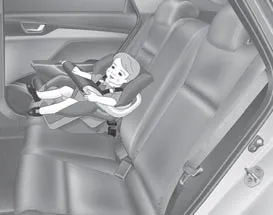
A forward-facing child seat provides restraint for the child's body with a harness. Keep children in a forward-facing child seat with a harness until they reach the top height or weight limit allowed by your child restraint’s manufacturer. The harness should always be snug and properly positioned.
Once your child outgrows the forward-facing child restraint, your child is ready for a booster seat.
Booster seats
A booster seat is a restraint designed to improve the fit of the vehicle's seat belt system. A booster seat positions the seat belt so that it fits properly over the lap of your child and across the shoulder.
Keep your child in a booster seat until they are big enough to sit in the seat without a booster and still have the seat belt fit properly. For a seat belt to fit correctly in the Hyundai Accent, the lap belt must lie snugly across the upper thighs, not the stomach. The shoulder belt should lie snug across the shoulder and chest and not across the neck or face. Children under age 13 must always ride in the rear seats and must always be properly restrained to minimize the risk of injury.
Installing a Child Restraint System (CRS) ➤


Other information:
Information - Using MP3 on the Hyundai Accent: This media section explains how your Hyundai Accent audio system handles common music files and what to expect when browsing tracks. Supported audio formats: The Hyundai Accent multimedia unit is designed to play popular formats for everyday listening, provided the files meet the requirements shown below.WARNING To prevent SERIOUS INJURY or DEATH to you or bystanders, always follow these precautions when working near or handling the battery: Always read and follow instructions carefully when handling a battery. Wear eye protection designed to protect the eyes from acid splashes. Keep all flames, sparks, or smoking materials away from the battery.
Contents
- Children Always in the Rear
- Selecting a Child Restraint System (CRS)
- Installing a Child Restraint System (CRS)
Categories
- Manuals Home
- Hyundai Accent Owners Manual
- Hyundai Accent Service Manual
- Questions & Answers
- Video Guides
- Useful Resources
- New on site
- Most important about car
- Privacy Policy

0.0071