
Hyundai Accent (HC): ESP(Electronic Stability Program) System / Description and Operation
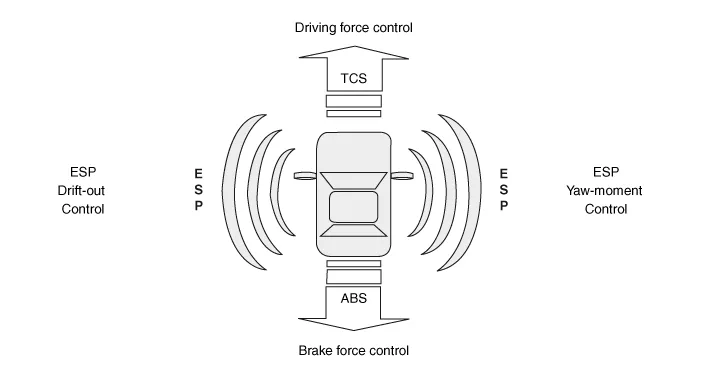
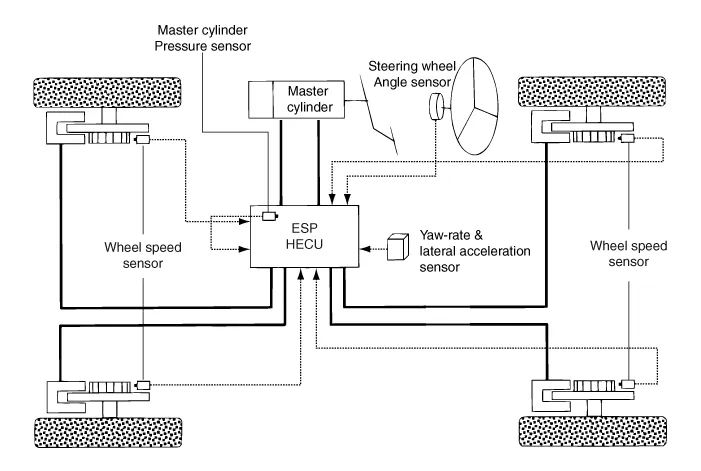
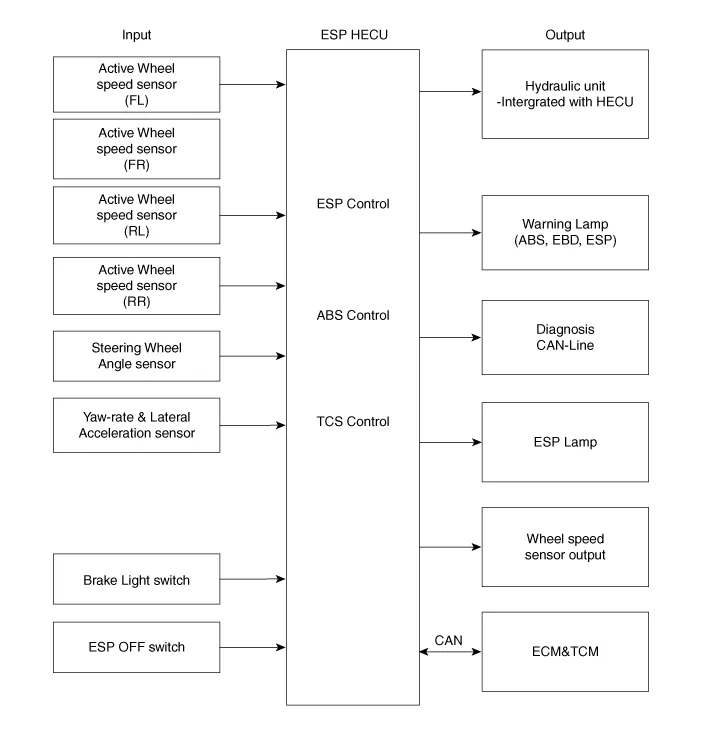
1.STEP 1The ESP analyzes the intention of the driver.

2.STEP 2It analyzes the movement of the ESP vehicle.

3.STEP 3The HECU calculates the required strategy, then actuates the appropriate valves and sents torque control requests via CAN to maintain vehicle stability.
1.ESP Non-operation-Normal braking.
| Inlet valve (IV) | Outlet valve (OV) | Traction Control Valve (TCV) | High pressure switch valve (HSV) | Return pump | |
| Normal braking | Open | Close | Open | Close | OFF |
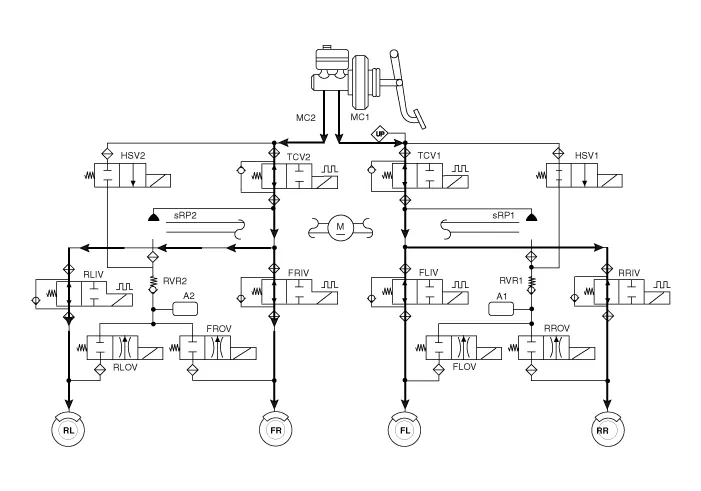

• IV : Inlet Valve
• OV : Outlet Valve
• RL : Rear left wheel
• FR : Front right wheel
• FL : Front left wheel
• RR : Rear right wheel
• RP : Return pump
• TCV : Traction Control Valve
• HSV : High pressure Switch Valve
2.ESP Increase Mode
| Inlet valve (IV) | Outlet valve (OV) | Traction Control Valve (TCV) | High pressure switch valve (HSV) | Return pump | |
| Normal braking | Open | Close | Close (Partial) | Open | ON (Motor speed control) |
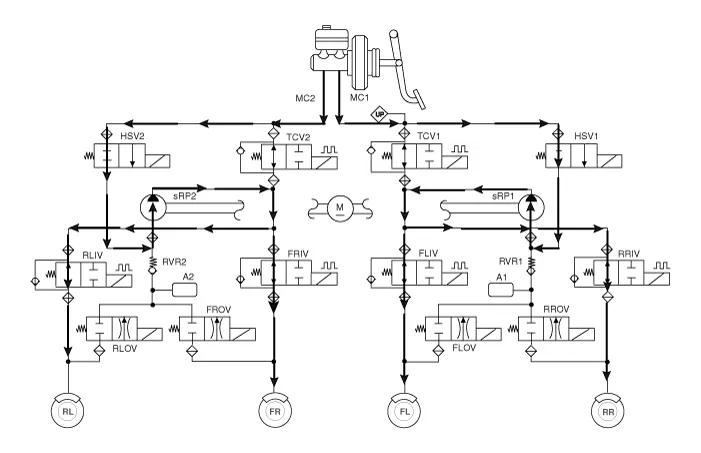

• IV : Inlet Valve
• OV : Outlet Valve
• RL : Rear left wheel
• FR : Front right wheel
• FL : Front left wheel
• RR : Rear right wheel
• RP : Return pump
• TCV : Traction Control Valve
• HSV : High pressure Switch Valve
3.ESP Hold Mode (FR is only controlled.)
| Inlet valve (IV) | Outlet valve (OV) | Traction Control Valve (TCV) | High pressure switch valve (HSV) | Return pump | |
| Normal braking | Close | Close | Close (Partial) | Open | OFF |
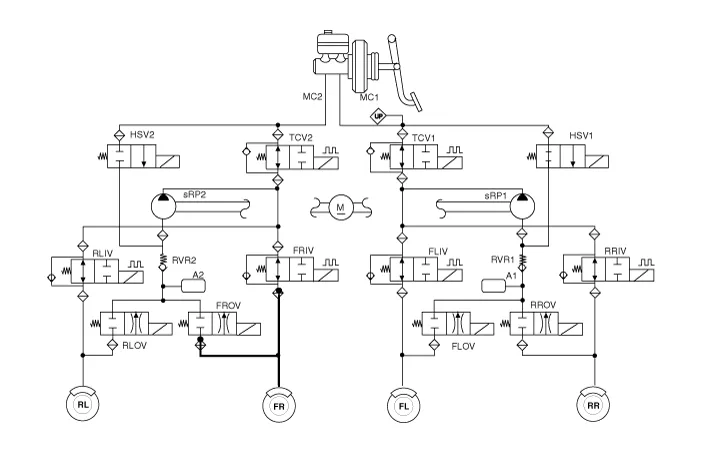

• IV : Inlet Valve
• OV : Outlet Valve
• RL : Rear left wheel
• FR : Front right wheel
• FL : Front left wheel
• RR : Rear right wheel
• RP : Return pump
• TCV : Traction Control Valve
• HSV : High pressure Switch Valve
4.ESP Decrease Mode (FR is only controlled)
| Inlet valve (IV) | Outlet valve (OV) | Traction Control Valve (TCV) | High pressure switch valve (HSV) | Return pump | |
| Normal braking | Close | Open | Close (Partial) | Open | ON (Motor speed low control) |
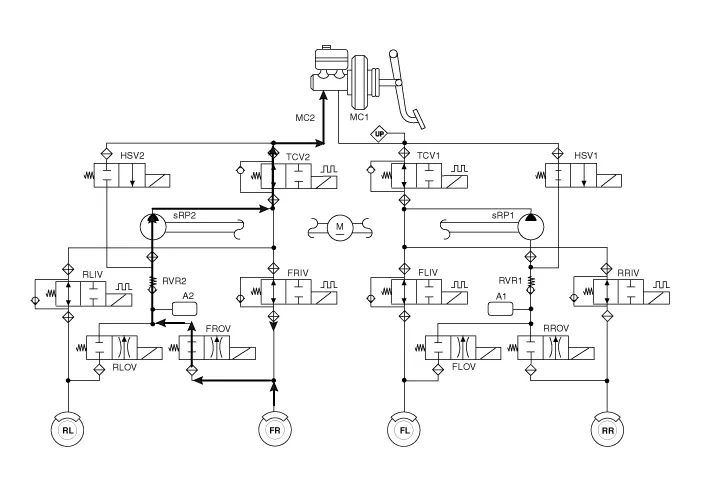

• IV : Inlet Valve
• OV : Outlet Valve
• RL : Rear left wheel
• FR : Front right wheel
• FL : Front left wheel
• RR : Rear right wheel
• RP : Return pump
• TCV : Traction Control Valve
• HSV : High pressure Switch Valve
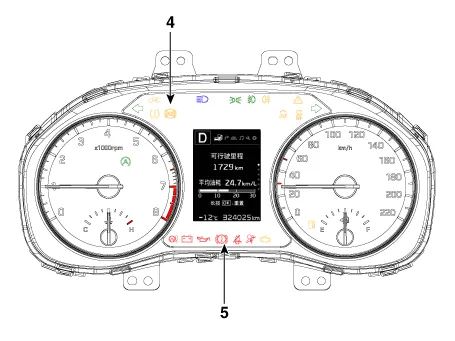
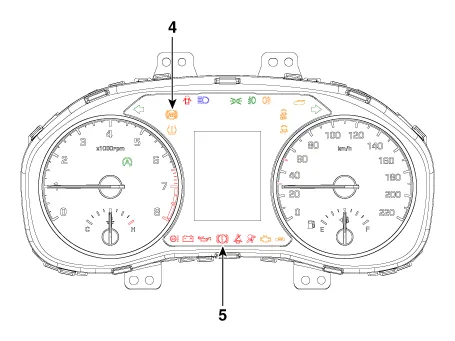
– During the initialization phase after IGN ON. (continuously 3 seconds).
– In the event of inhibition of ESP functions by failure.
– During diagnostic mode.
– When the ECU Connector is separated from ECU.
– During the initialization phase after IGN ON. (continuously 3 seconds).
– When the Parking Brake Switch is ON or brake fluid level is low.
– When the EBD function is out of order .
– During diagnostic mode.
– When the ECU Connector is separated from ECU.
– During the initialization phase after IGN ON. (continuously 3 seconds).
– In the event of inhibition of ESP functions by failure.
– During dignostic mode.
– When the ESP control is operating. (Blinking - 2Hz)
– During the initialization phase after IGN ON. (continuously 3 seconds).
– When driver turn off the ESP function by on/off switch.


Other information:
Hyundai Accent (HC) (2017 - 2022) Service Manual: Exterior Lights
Lighting control To operate exterior lighting on the Hyundai Accent, rotate the knob at the end of the control lever to one of the positions listed below. The available positions may differ by type and equipment. â– Type A â– Type B â– Type C Type A (1) OFF position (2) Parking lamp position (3) Headlamp position Type B (1) OFF position (2) AUTO light position (3) Parking lamp position (4) Headlamp position Type C (1) DRL OFF position (2) AUTO position (3) Parking lamp position (4) Headlamp position Daytime running light (DRL) The Daytime Running Lights (DRL) help other road users notice the front of your Hyundai Accent during daytime driving, particularly in low-angle light after dawn and before sunset.Hyundai Accent (HC) (2017 - 2022) Service Manual: Integrated Thermal Management Module (ITM)
- Components [Intelligent Variable Transmission (IVT) System] 1. Integrated thermal management module (ITM)2 . Integrated thermal management module (ITM) O-ring3. Heater pipe B4. Heater water hose5. Heater pipe A6 . Heater pipe A gasket7 . Water inlet fitting8 . Water inlet fitting gasket [Manual Transaxle System] 1. Integrated thermal management module (ITM)2 .
Categories
- Manuals Home
- Hyundai Accent Owners Manual
- Hyundai Accent Service Manual
- Questions & Answers
- Video Guides
- Useful Resources
- New on site
- Most important about car
- Privacy Policy

0.0104