
Hyundai Accent (HC): Air bag - Advanced supplemental restraint system / Occupant Classification System (OCS)
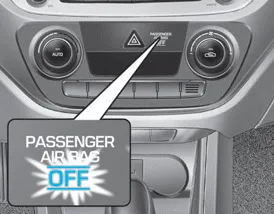
Your Hyundai Accent is equipped with an Occupant Classification System (OCS) in the front passenger’s seat. This smart safety feature works with the Hyundai Accent Supplemental Restraint System (SRS) to help manage front passenger air bag operation based on who—or what—is detected on the passenger seat.
Main components of the Occupant Classification System
- A detection device located within the front passenger seat cushion that measures occupant presence and seating load.
- Electronic logic that helps determine whether the front passenger air bag systems should be activated or deactivated, depending on the detected condition.
- An indicator light located on the instrument panel which illuminates the words "PASSENGER AIR BAG OFF" indicating the front passenger air bag system is deactivated.
- The instrument panel air bag indicator light is interconnected with the OCS, so warning indications can be displayed if a fault is detected.
The OCS is designed to help detect the presence of a properly seated front passenger and determine whether the Hyundai Accent passenger’s front air bag should be enabled (may inflate) or disabled (will not inflate) in a crash.
The purpose is to help reduce the risk of injury or death from an inflating air bag to certain front passenger seat occupants, such as children, by requiring the air bag to be automatically turned OFF when appropriate.
For example, if a child restraint of the type specified in regulations is placed on the seat, the occupant classification sensor can detect it and cause the air bag to turn OFF. This is one reason Hyundai Accent safety guidance continues to emphasize that children should ride properly restrained in the rear seats.
Front passenger seat adult occupants who are properly seated and wearing the seat belt correctly should not cause the passenger air bag to be automatically turned OFF. For some small adults, the system may classify them differently; also, if the occupant does not sit in the seat properly (for example, by not sitting upright, by sitting on the edge of the seat, or by otherwise being out of position), this could cause the sensor to turn the air bag OFF.
You will find the "PASSENGER AIR BAG OFF" indicator on the center fascia panel. The Hyundai Accent OCS evaluates the passenger seat status and helps activate or deactivate the front passenger air bag based on the detected conditions.
Always be sure that you and all vehicle occupants are seated properly and wearing the seat belt properly for the most effective protection by the air bag and the seat belt. A correct, centered seating posture helps the Hyundai Accent safety systems work as designed.
The OCS may not function properly if the passenger takes actions which can affect the classification system. These include:
- Failing to sit in an upright position.
- Leaning against the door or center console.
- Sitting towards the sides of the front of the seat or perching on the seat edge.
- Putting their legs on the dashboard or resting them on other locations which reduce the passenger weight on the front seat.
- Wearing the seat belt improperly (twisted, under the arm, or loose).
- Reclining the seatback.
- Wearing thick clothing such as ski wear or hip protection wear that can change how the body loads the seat.
- Putting an additional thick cushion on the seat.
- Putting electrical devices (for example, notebook, satellite radio, cell phone) on the seat with inverter charging, or other conductive items that can influence detection.
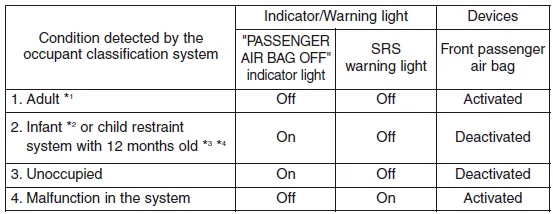
Condition and operation in the front passenger Occupant Classification System
WARNING
Riding in an improper position or placing weight on the front passenger’s seat when it is unoccupied by a passenger adversely affects the OCS. In your Hyundai Accent, this can lead to incorrect air bag status. To reduce the risk of serious injury or death:
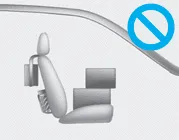
• NEVER put a heavy load in the front seat or seatback pocket, or hang any items on the front passenger seat.

• NEVER place your feet on the front passenger seatback.

• NEVER sit with your hips shifted towards the front of the seat.

• NEVER ride with the seatback reclined when the vehicle is moving.
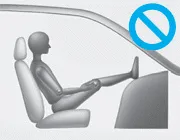
• NEVER place your feet or legs on the dashboard.

• NEVER lean on the door or center console or sit on one side of the front passenger seat.

• Do not sit on the passenger seat wearing heavily padded clothes such as ski wear and hip protector.

• Do not use car seat accessories such as thick blankets and cushions which cover up the car seat surface.

• Do not place electronic
devices such as laptops,
DVD player, cell phone, or
conductive materials
such as water bottles on
the passenger seat.
• Do not use electronic
devices such as laptops
and satellite radios which
use inverter chargers.

• If a large quantity of liquid
has been spilled on the
passenger seat, the air
bag warning light may
illuminate or the system may malfunction.
Therefore, make sure the
seat has been completely
dried before driving the
vehicle.
• Do not place sharp objects on the front passenger seat. These may damage the
occupant detection system
if they puncture the seat cushion.
• Do not place any items under the front passenger seat.
• When changing or replacing the seat or seat cover, use original items only.
The OCS has been developed
based on using original HYUNDAI seats. Altering or changing authentic parts may
result in system malfunction and increase the risk of injury in a collision. Any
of the above could interfere
with the proper operation of the OCS sensor, thereby increasing the risk of an
injury in an accident.
Proper seated position for OCS
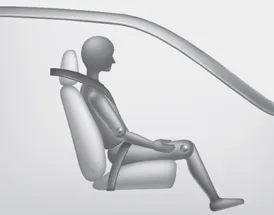
If the "PASSENGER AIR BAG OFF" indicator is on when an adult is seated in the front passenger seat of your Hyundai Accent, place the Engine Start/Stop button in the OFF position and ask the passenger to sit properly (sitting upright with the seat back in an upright position, centered on the seat cushion with their seat belt on, legs comfortably extended and their feet on the floor). Restart the engine and have the person remain in that position for several seconds so the system can complete classification. This will allow the system to detect the person and, when appropriate, enable the passenger air bag. If the "PASSENGER AIR BAG OFF" indicator is still on, ask the passenger to move to the rear seat for improved safety.
WARNING
Never allow an adult passenger to ride in the front passenger seat when the "PASSENGER AIR BAG OFF" indicator is illuminated. During a collision, the air bag will not inflate if the indicator is illuminated. Have your passenger reposition themselves in the seat. If the "PASSENGER AIR BAG OFF" indicator remains illuminated after the passenger repositions properly and the vehicle is restarted, have the passenger move to the rear seat because the air bag will not inflate.
NOTICE
The "PASSENGER AIR BAG OFF" indicator illuminates for approximately 4 seconds after the Engine Start/Stop button is in the ON position or after the engine is started. If the front passenger seat is occupied, the Hyundai Accent OCS will then classify the front passenger after several more seconds.
Do Not Install a Child Restraint in the Front Passenger's Seat
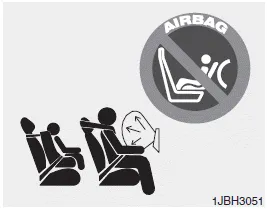
Even though your vehicle is equipped with the OCS, never install a child restraint in the front passenger's seat of the Hyundai Accent. An inflating air bag can forcefully strike a child or child restraint, resulting in serious or fatal injury. For best protection, always install a child restraint properly in the rear seat and follow all CRS and LATCH guidance in this manual.
WARNING
- NEVER place a rear-facing or front-facing child restraint in the front passenger's seat of the vehicle.
- An inflating frontal air bag could forcefully strike a child resulting in serious injury or death.
- Always properly restrain children in an appropriate child restraint in the rear seat of the vehicle. This recommendation is especially important for Hyundai Accent family safety.


Other information:
Hyundai Accent (HC) (2017 - 2022) Owner's Manual: Troubleshooting
Standard Flow of Diagnostic Troubleshooting Notes With Regard To Diagnosis The phenomena listed in the following table are not abnormal.ConditionExplanation System check soundWhen starting the engine, a thudding sound can sometimes be heard coming from inside the engine compartment. This is because the system operation check is being performed.
Categories
- Manuals Home
- Hyundai Accent Owners Manual
- Hyundai Accent Service Manual
- Questions & Answers
- Video Guides
- Useful Resources
- New on site
- Most important about car
- Privacy Policy

0.009